


HEALTH: THE LAST BITE: WHEN ENOUGH IS NOT ENOUGH.
- psychlensui
- Apr 18
- 2 min read
By Fawunmi Elizabeth
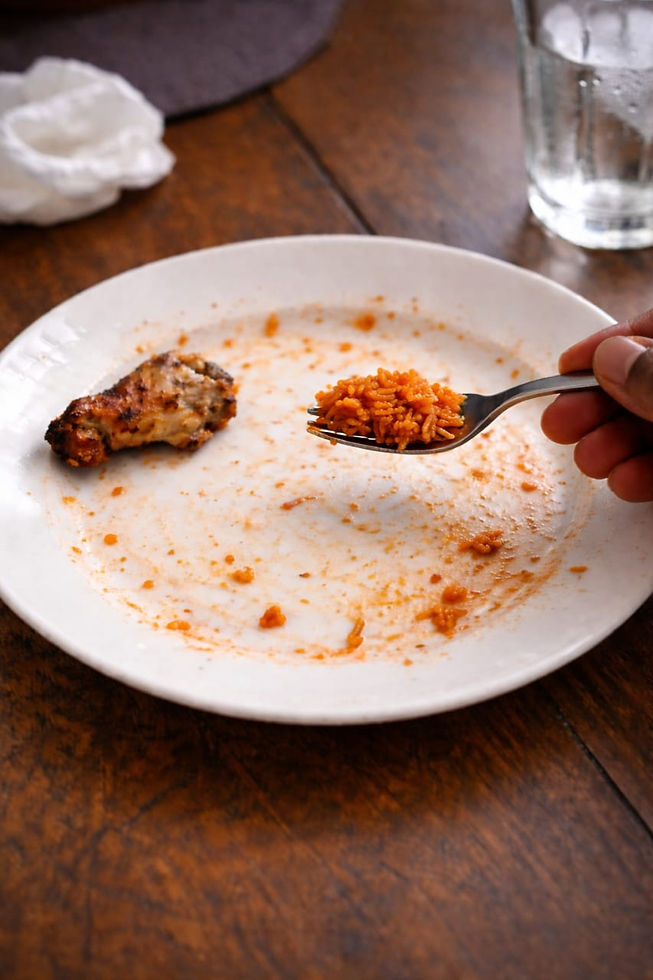
You’re done eating or at least, you should be. The plate is nearly empty, but there’s still a little something left: maybe two forkfuls of jollof rice, a bite of chicken, or the last morsel of swallow. And even as your stomach protests, your brain whispers, “You can’t waste it.”
It’s a familiar scene, quietly repeated in homes, cafeterias, and restaurants every day. The “last bite” is rarely just about hunger. It often reveals something deeper about how we eat, why we eat, and why stopping isn’t always as simple as it seems.
The human body doesn’t immediately recognize fullness. It takes about 15 to 20 minutes for the brain to receive signals that you’ve had enough to eat. This delay means that by the time you feel stuffed, you’ve likely already eaten more than your body needs.
But physiology is only part of the story. The urge to finish a meal is often driven by habit and emotion. Psychologists note that finishing food can provide a sense of closure, a small emotional reward, even a fleeting feeling of control. In this way, the last bite becomes less about nutrition and more about comfort.
Sometimes, it’s about avoiding waste. Other times, it’s the simple pleasure of taste, the desire to hold on to a satisfying experience just a little longer.
Interestingly, the body and brain don’t always work in perfect harmony. While the body signals fullness, the brain may still crave continuation. Factors like how enjoyable the meal is, stress levels, or even how the food is presented can influence this disconnect. In many cases, people eat beyond fullness not out of hunger, but because stopping feels incomplete.
Over time, this pattern can have consequences. Physically, it may contribute to weight gain, digestive discomfort, disrupted hunger cues, and increased risk of metabolic issues. Emotionally, it can fuel guilt, constant “food noise,” and cycles of restriction followed by rebound over eating.
Beyond health, the “last bite” also reflects our relationship with control. It poses a quiet question: do we stop when our body says stop, or when the plate is empty?
Breaking this cycle doesn’t require strict dieting. Sometimes, the most powerful choice is simply setting the fork down and walking away, proving that you, not the plate, decide when enough is truly enough.
There is nothing wrong with enjoying food. In fact, food is meant to be enjoyed. But true satisfaction often comes not from eating more, but from knowing when to stop. Sometimes, the healthiest decision isn’t the first bite or even the second but the one you choose not to take.



Comments